
SEO
How to create quick landing pages that actually drive traffic
A repeatable template for fast, single intent landing pages that rank, convert, and stay maintainable. Built for small teams without a full marketing department.
-
 The Turn Group
- 7 min read
- 7.8k views
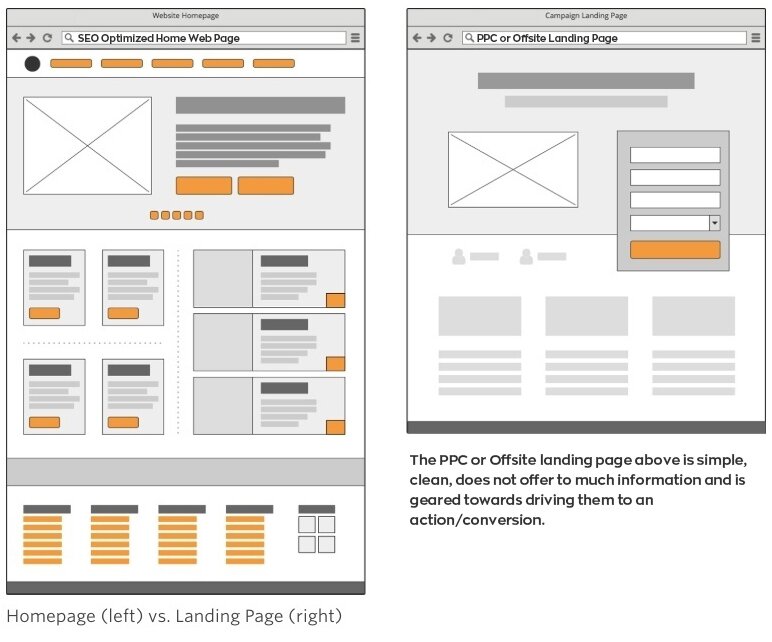
A landing page that drives traffic is not the same as a landing page that converts clicks. Both matter, but they require different thinking. This is a repeatable template for building single-intent landing pages that rank for a specific keyword, satisfy the searcher's intent, and convert at a rate worth measuring, without requiring a full marketing department to execute.
Single intent is the foundation
The most common mistake in landing page design is trying to accomplish too many things on one page. A good landing page serves one primary intent and asks for one primary action. "Commercial roofing contractor in Cincinnati" is a landing page topic. "All our roofing services" is not a landing page topic; it is a navigation problem.
Before building any landing page, write down:
- The single query this page is designed to rank for
- The single action you want the visitor to take after reading
- The specific audience this page is written for
Everything else on the page should serve those three things. If it does not, it does not belong on the page.
The structure that ranks and converts
A landing page built for both organic traffic and conversion has a consistent structure that works across industries:
1. Title and headline aligned to the search query
The page's H1 heading and title tag should reflect the primary keyword in natural language. If someone searches "emergency HVAC repair Minneapolis" and your H1 says "HVAC Services," you have created a relevance disconnect. The headline should immediately confirm to the visitor that they are in the right place.
2. A clear, direct value statement above the fold
The first 150 words of the page body content should tell the visitor what you do, who you do it for, and why they should choose you over the alternatives. This is not fluff. It is the answer to "why should I keep reading instead of hitting the back button?" Be specific: "licensed commercial HVAC contractor serving the Twin Cities metro, 18-hour emergency response, serving restaurants, office buildings, and retail since 2009."
3. Your primary call to action, early and clear
The call to action (phone number, contact form, booking link) should be visible without scrolling on the initial page load. Do not make the visitor hunt for how to contact you. On mobile especially, a large, tap-friendly phone number or button near the top of the page is the difference between a lead and a bounce.
4. Substantive body content that matches search intent
For a landing page to rank organically, it needs real content, not just a hero image and a contact form. The body content should cover:
- What the service is and what it includes specifically
- The service area (specific cities and regions, not just "we serve the greater metro area")
- Why your approach is different or better (specific differentiators, not marketing platitudes)
- Common questions your ideal customers ask before hiring for this service
- Any relevant credentials, certifications, or licensing
The target length for a landing page that ranks is typically 600-1200 words. Longer is not always better; it is only better if the additional words are genuinely informative and relevant. A 600-word page that answers the search intent completely outperforms a 1500-word page padded with filler.
5. Trust signals close to the call to action
Reviews, testimonials, credentials, and years in business are most effective when they appear near the action you want the visitor to take. A contact form next to three genuine customer reviews converts better than a contact form on an otherwise bare page.
The technical requirements for ranking
Content is necessary but not sufficient. A landing page that ranks needs:
- A clean, keyword-reflecting URL slug.
/commercial-hvac-repair-minneapolis, not/services/page-12. - A unique title tag (under 60 characters) that includes the primary keyword and differentiates from other pages on the site.
- A descriptive meta description (under 155 characters) that summarizes what the page offers and encourages a click.
- Schema markup. For a local service page, LocalBusiness schema with your service area and contact details helps Google understand the page's entity context. Service schema is worth adding if you want rich result eligibility.
- Fast load time. Properly sized images, no render-blocking scripts above the fold, a CDN if you have one. Core Web Vitals matter for ranking and for conversion; a slow page loses both search position and visitors.
- Internal links to and from the page. The landing page should link to relevant blog articles and service area pages. Related pages on your site should link back to it. An isolated page with no internal links is hard for Google to contextualize.
Landing pages for different intent types
Not all landing pages serve the same intent, and the structure should reflect that:
- Service landing pages (transactional intent): Heavy on trust signals, credentials, specific service details, clear pricing or pricing structure, and a direct contact mechanism. Shorter body content is fine if the essentials are covered.
- Location landing pages (local transactional intent): Emphasize the specific geographic coverage, include specific neighborhood or community names, reference local context where genuine. Identical location pages for different cities with just the city name swapped are doorway pages and Google treats them as such. Each location page needs genuinely unique content.
- Commercial investigation pages (comparison/evaluation intent): More content, more detail, honest pros and cons. The reader is evaluating; help them evaluate accurately and they will trust you with the decision.
Measuring whether it is working
Track each landing page's performance in Google Search Console and your analytics tool. The metrics that matter:
- Organic impressions and clicks: Is the page appearing in search results? Are searchers clicking?
- Bounce rate / engagement rate: Are visitors staying and engaging or leaving immediately?
- Goal conversions: Are visitors completing the action you designed the page for?
If the page has impressions but low CTR, the title tag and meta description need work. If it has traffic but high bounce rate, the page content is not matching what searchers expected. If it has engaged visitors but no conversions, the call to action or trust signals need improvement. These are all fixable when you have the data to identify the specific problem.
For finding the right keywords before you build a landing page, the keyword research guide is the starting point. And for how we approach landing page builds within full site projects, the website design services page covers the scope of what we deliver.
The bottom line
A landing page that drives traffic is built around a single, clearly defined search intent, has substantive content that genuinely answers what the searcher needs, converts through prominent and trust-supported calls to action, and is technically sound enough for Google to index and rank. Build one page at a time, measure it, and improve based on the data. That is the repeatable system, and it works regardless of industry or budget.
