
SEO
SEO tips and tricks that still work in 2026
No hacks. A curated set of search optimization moves that survived AI Overviews, the helpful content update, and the slow death of keyword stuffing. Real tactics for real businesses.
-
 The Turn Group
- 11 min read
- 401 views
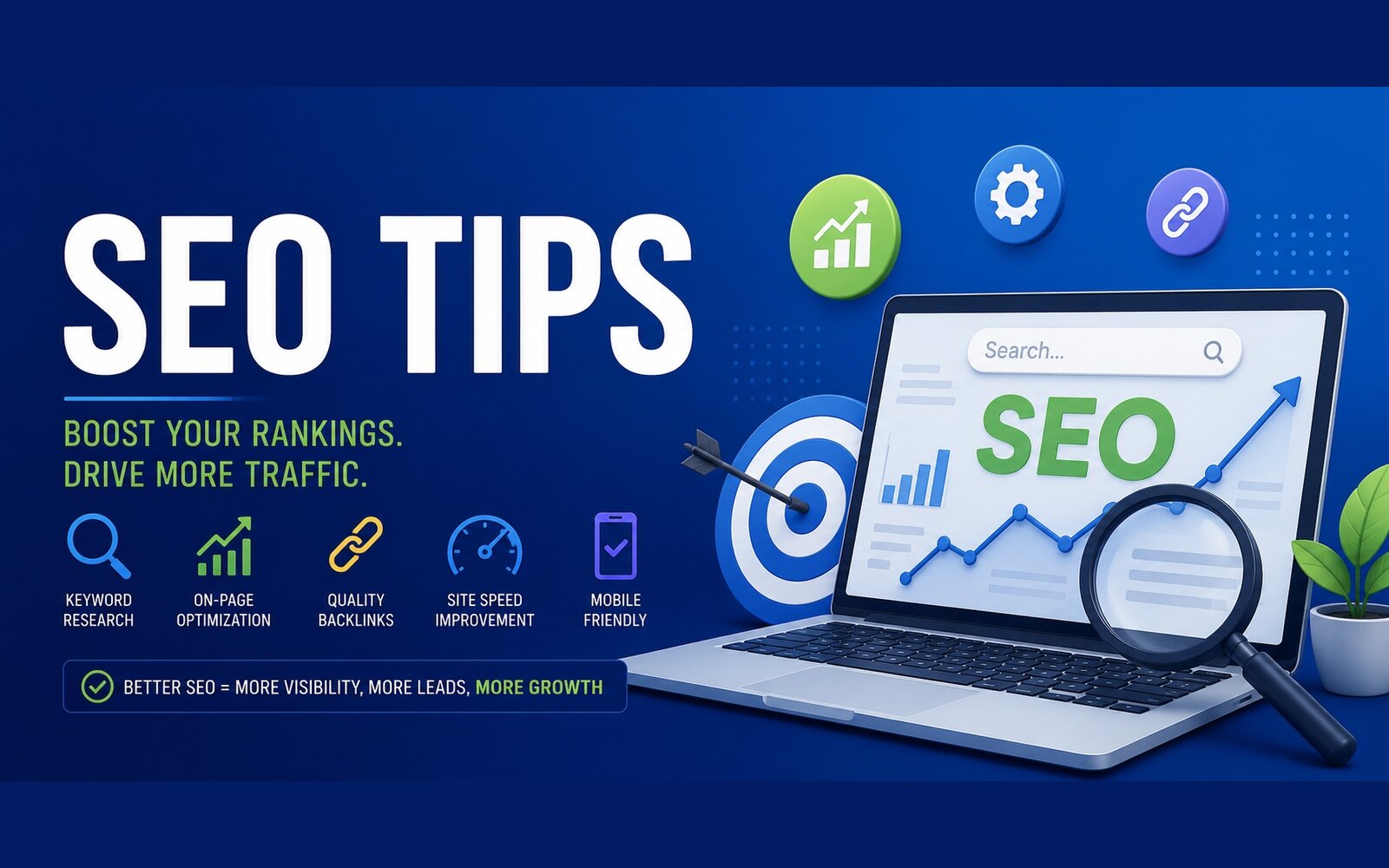
SEO in 2026 is not what it was even three years ago. AI Overviews changed the click economy, the helpful content update obliterated the thin affiliate playbook, and keyword stuffing has not worked since the Penguin algorithm rolled out over a decade ago. What remains is a smaller, more disciplined set of tactics that genuinely move rankings for real businesses. No hacks, no shortcuts. Just the moves that still work, with notes on what to skip and why.
Write for intent, not keywords
The single biggest shift in modern SEO is that Google has gotten very good at reading intent. The query best dumpster rental Kansas City and cheap dumpster KC point to the same underlying need, and Google knows that. Trying to build a separate page for every keyword variant is a 2014 strategy that now triggers thin content filters.
The right move is to identify the underlying intent behind a cluster of queries and build one strong page that satisfies all of them. Before writing, search your target query in an incognito window and read the top five results carefully. Note what type of page each one is, how long, what questions it answers, and what format works (listicle, guide, comparison, calculator, service page). The current SERP is a real time signal from Google about what kind of content satisfies that intent. Build that kind of content, only more useful.
EEAT is the framework, not a checklist
Experience, Expertise, Authoritativeness, Trustworthiness. EEAT is not a single ranking factor; it is the framework Google's quality raters use to evaluate whether a page deserves to rank. The signals that feed EEAT include:
- A real author byline with credentials. Every meaningful article should have a named author with a bio that establishes why they can write authoritatively about the topic. Anonymous content is increasingly devalued.
- First hand experience signals. Original photos, screenshots from your actual workflow, specific numbers from projects you ran, edge cases you encountered. Generic AI written content has none of these and Google can tell.
- Citations to authoritative sources. Link out to primary sources, official documentation, peer reviewed studies. Outbound links are not a ranking penalty; they are a quality signal.
- Transparent business information. Visible contact information, a real physical address, a privacy policy, terms of service. These have always been part of EEAT and remain important.
- Author and entity consistency. The same author publishing across multiple authoritative sites builds entity authority in Google's knowledge graph.
EEAT is not something you fix in a week. It is something you build with every article you publish and every project you ship.
Structured data: the most underused free win
Schema.org JSON-LD is one of the few SEO tactics that delivers immediate visible results, costs nothing, and almost every site implements badly. The structured data you ship to Google directly affects how your pages appear in search: rich snippets, knowledge panels, AI Overview citations, and Discover surfaces all lean on schema.
For most local service businesses, the priority schemas are:
- LocalBusiness (or the appropriate subtype) on the homepage, with full NAP, opening hours, geo coordinates, sameAs links to social profiles, and aggregateRating if you have reviews.
- Service on each service page, with areaServed, provider, and description.
- FAQPage on any page that genuinely has a Q and A section, but only where the Q and A is actually visible to users. Hidden FAQs marked up as FAQPage will get manual actions.
- Article or BlogPosting on every blog post, with author, datePublished, and dateModified.
- BreadcrumbList on every internal page.
- Review and AggregateRating where you have real reviews tied to specific products or services. Be careful here; fake or scraped reviews trigger penalties.
Validate everything at the Google Rich Results Test before deploying. A single typo in a schema property can disqualify the entire markup.
Internal linking is the most underrated lever
Most sites obsess over backlinks and ignore the internal linking they fully control. Internal links pass PageRank, distribute crawl budget, and tell Google which pages on your site are most important. They also help users discover related content, which improves engagement metrics that feed into rankings.
The rules that still work:
- Link from pages that have authority to pages that need it. Your homepage, your most cited article, and your most trafficked service page have internal authority. Link from them to the pages you want to rank.
- Use descriptive anchor text. Not click here. Not this article. The anchor text should describe the destination. Anchor text is one of the strongest signals about what a linked page is about.
- Build genuine topical clusters. A pillar page covering a broad topic linking to detailed cluster pages on subtopics, and the cluster pages all linking back to the pillar. This signals topical authority and lifts the entire cluster.
- Audit for orphan pages. A page with no internal links pointing to it is orphaned. Google crawls it rarely and ranks it weakly. Every page worth keeping should have at least three internal links pointing to it from elsewhere on the site.
Technical SEO that still matters
Most technical SEO is solved by competent development. The pieces that still move rankings in 2026:
- Core Web Vitals. LCP under 2.5 seconds, INP under 200 ms, CLS under 0.1. These are real ranking factors, especially in tight competitive niches. INP replaced FID in March 2024 and is harder to pass.
- Mobile first. Google indexes the mobile version of your site. If your mobile experience is degraded, your rankings degrade with it. Test on a real phone, not just DevTools responsive mode.
- Crawlable URLs. No infinite parameter loops, no session IDs in URLs, no faceted navigation generating millions of useless variant URLs. Use canonical tags to consolidate.
- HTTPS everywhere. Mixed content is a ranking demotion and a security warning. There is no reason to serve any production page over HTTP in 2026.
- XML sitemaps that match reality. Submit a sitemap to Search Console that contains only pages you actually want indexed. Excluding 404s, redirects, and noindex pages from the sitemap is basic hygiene.
- Robots.txt that is not blocking your own site. One of the most common findings in SEO audits is a robots.txt that accidentally blocks the staging path that became the production path, or a leftover
Disallow: /from a launch checklist.
Local SEO and Google Business Profile
For local service businesses, Google Business Profile is the single highest leverage SEO asset, often more important than the website itself for transactional queries with local intent. The GBP work that matters:
- Verify and fully complete the profile. Business name, address, phone, hours, categories (primary and secondary), services, products, photos. Every empty field is a missed signal.
- Choose the right primary category. The primary category is the strongest categorical signal you send Google about what your business is. Pick the most specific one that accurately describes what you do.
- Steady review velocity. Reviews matter, but the rate at which you get them matters as much as the total count. Twenty reviews over six months reads more naturally than fifty in one week.
- Respond to reviews. Every review, positive and negative, deserves a response. This is a trust signal to both Google and prospects evaluating your business.
- Post regularly. GBP posts are short lived but appear in your Knowledge Panel and contribute to engagement signals. Aim for one or two posts a week minimum.
- NAP consistency across citations. Your name, address, and phone must be identical across every directory and citation site. Inconsistency creates entity confusion.
Content freshness without churn
Google rewards content that is kept current, but not content that is changed for the sake of changing. The tactic that works is genuine substantive updates to articles that already rank, not date stamping with no real edits.
Pick your top ten articles in Search Console. For each one, ask: is anything in this article out of date? Are there new examples, new data, new tools, new sections to add? Make real edits, update the dateModified in your schema, and let Google recrawl. Articles refreshed this way often see meaningful ranking lifts within four to six weeks.
Hacks to skip in 2026
For every working tactic, there are three that no longer work and several that actively hurt. Stop doing:
- Exact match keyword stuffing. Repeating your target phrase fifteen times in an article does not help and reads worse than natural language.
- Hidden text and cloaking. Manual action risk with no upside.
- Private blog networks. Detected at scale and routinely deindexed.
- Mass directory submissions. A relic from 2011. Pick a small number of high quality, vertical relevant directories and skip the rest.
- Pure AI generated content with no human editing. The helpful content update specifically targets this. Use AI to draft and outline, but ship work that has been edited, fact checked, and elevated by a human with subject matter expertise.
- Doorway pages. One landing page per zip code with identical content and only the city name changed is still a doorway page and still gets penalized. Build genuinely different content for each location, with local photos, local case studies, and local team members.
What to focus on this quarter
If you only do three things in the next ninety days, do these. First, audit your top ten existing pages, fix EEAT signals, and refresh the content. The ranking lift from improving pages you already have is faster than the lift from publishing new ones. Second, complete and tune your Google Business Profile if you serve a local market. Most service businesses leave fifty percent of GBP power on the table. Third, implement clean structured data on every page type and validate it. Schema is free, fast to ship, and immediately changes how you appear in search.
SEO in 2026 is durable, slow, and unglamorous. The agencies promising overnight rankings are selling a 2014 product. The ones building real businesses online are doing the long work of EEAT, intent, schema, internal linking, and steady content improvement. That work compounds. The shortcuts do not.
